

A buyer clicks an Abu Dhabi property ad, asks about the advertised unit, and hears that it is no longer available. That enquiry may look like a lead in the campaign report. For the buyer, it is a wasted conversation.
Madhmoun makes accurate listing information a useful starting point for marketing. The brokerage still needs a process that carries the same facts through its portals, ads, landing pages and CRM. Here is a practical way to build that process.
What is Madhmoun, and why does it matter now?
Madhmoun is the Abu Dhabi Real Estate Centre’s multiple listing service initiative. In its 27 March 2025 announcement, the Abu Dhabi Media Office described verified listings, real-time property updates and authentic advertising as central to the platform.
There is a concrete adoption signal behind the topic: ADREC’s 17 July 2026 market release reported more than 41,200 regulated real estate advertising permits facilitated through Madhmoun since launch. That figure counts permits; it should not be presented as a count of unique homes or completed sales.
For brokerage marketing managers, the useful question is operational: when a property detail changes, how quickly does every customer-facing version change with it? The workflow below is Digital Boost’s marketing recommendation, rather than an official Madhmoun integration specification.
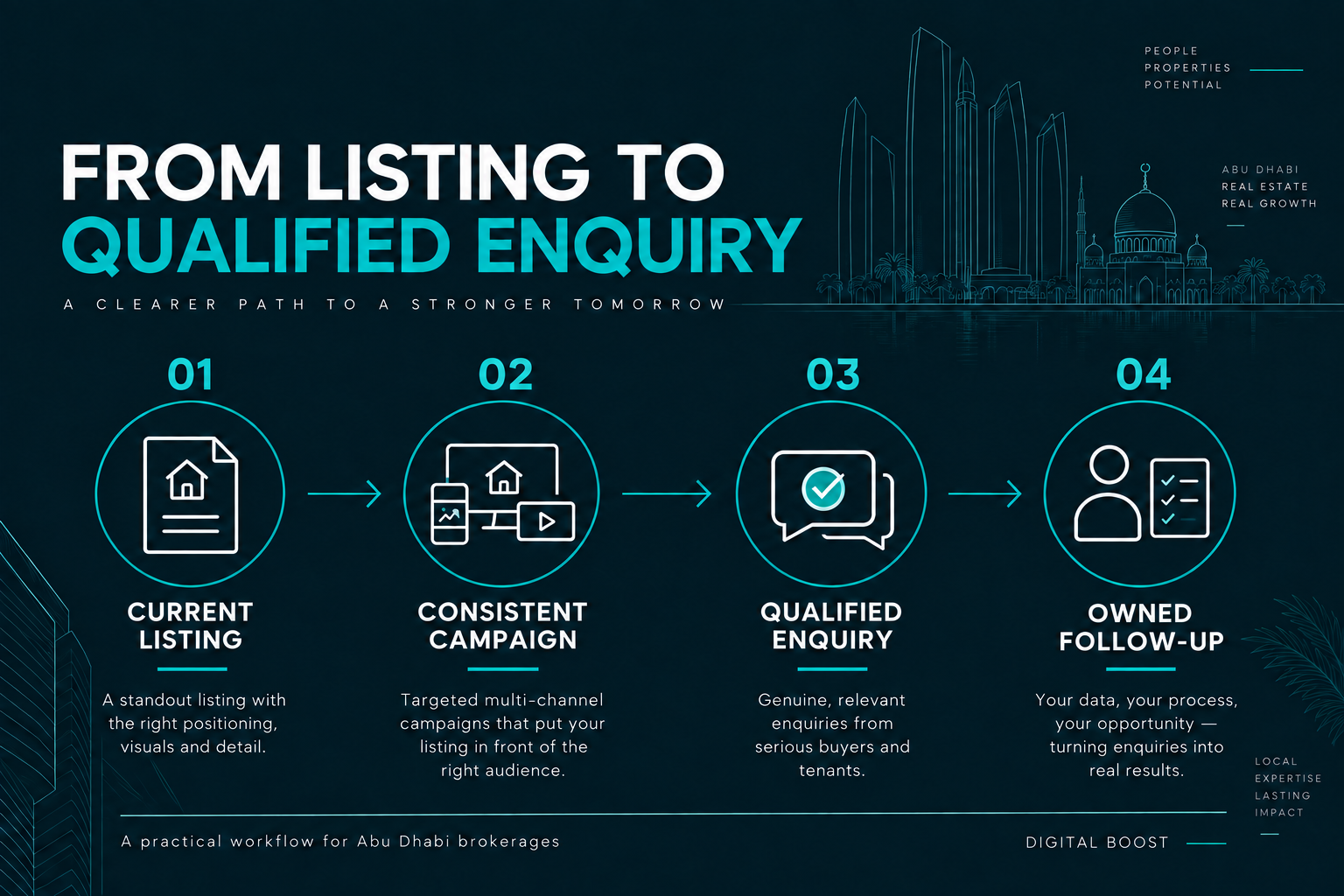
1. Give each advertised property one current record
Start with a listing register that marketing and sales can both access. A CRM can hold it, but a carefully maintained shared register is enough for a small pilot. Avoid asking each agent to maintain a separate version of the same property.
Record these essentials before promoting a specific unit:
- The internal property reference and applicable listing or advertising permit references.
- The community, building, unit type, area and the unit used for that area measurement.
- The current asking price in AED, availability status and viewing arrangements.
- The approved photos, floor plan and wording that apply to that property.
- The person responsible for confirming details, plus the last confirmation date.
- The portal URLs, landing page and campaigns using the record.
Keep verification and availability as separate fields. A listing’s verification history does not tell an agent whether the unit is still available at the price a buyer has just seen. Check current requirements with ADREC before launch; do not infer permission to advertise from this workflow.
2. Match the promise across the whole campaign
Review one live journey from the buyer’s perspective: search or social ad, property page, enquiry form and first agent reply. The advertised price, property type and availability should agree at every step.
In Abu Dhabi, a broad “Saadiyat homes” campaign and an ad for one specific Saadiyat apartment make different promises. A neighbourhood page can offer a clearly described selection. A unit ad should open the matching property details, with an honest next step if availability changes.
Use English and Arabic versions of the same approved facts. Check prices, area units, payment terms and availability after translation. For project imagery, distinguish renders from photographs of completed homes. Avoid adding unsupported rental returns or delivery promises to make a creative more persuasive.
Our property portal marketing service focuses on this connection between listing presentation and enquiry quality. Clearer information also helps a prospect decide whether the property fits before contacting the team.
3. Carry the property reference into the enquiry
An agent should be able to identify the property without asking the buyer to resend the ad. Capture the property reference, page URL, campaign source and enquiry time alongside the contact details. Keep a record of the buyer’s requested contact method.
Ask only the qualification questions that support the next conversation: buying or renting, approximate budget, preferred community and intended timing. Avoid turning a viewing request into a long questionnaire. Additional details can follow when an agent responds.
Route the enquiry to an available owner and define a backup when that person cannot respond. Store the actual next action, such as confirming availability or arranging a viewing. An automatic acknowledgement can confirm receipt, but it should not claim that a viewing or property reservation is confirmed.
This is where CRM and lead routing should connect to the listing record. A verified source alone cannot assign an agent or preserve the context of a WhatsApp conversation.
4. Make changes trigger a marketing task
Illustrative example: an owner changes the asking price of an Al Reem Island apartment. The listing owner updates the record and assigns a task covering the portal, landing page, live creative and agent response template. Marketing confirms each update before the task closes.
Use the same process when a property becomes unavailable. Pause unit-specific promotion, update the page honestly and offer relevant alternatives without implying that the original unit remains on offer. Keep the original enquiry context so the follow-up conversation makes sense.
For the first week, nominate one person to check the promoted inventory at the start of each working day. Agree a same-day escalation for unresolved availability or price differences. These are suggested operating targets; adjust them to the team’s coverage and campaign activity.
Measure whether the handoff is improving
Track enquiries marked “advertised unit unavailable” or “price mismatch” separately from budget and timing mismatches. Then review qualified conversations and booked viewings by property and source. Deduplicate repeat enquiries before comparing channels.
Cost per lead can still be useful, but pair it with cost per qualified enquiry and cost per booked viewing. Define qualification consistently before comparing campaigns. The UAE real estate lead quality scorecard provides a starting point for that discussion.
Start with ten promoted listings
Choose ten active listings, identify every place they appear and assign an owner to each record. Review one enquiry journey per listing. Fix missing references, inconsistent details and unassigned follow-ups before expanding the process.
Need help connecting your Abu Dhabi listings, campaigns and CRM? Book a strategy call with Digital Boost. We can review your listing-to-lead handoff and identify where prospects lose context before reaching an agent.
Book a listing-to-lead strategy call or talk to Digital Boost on WhatsApp.