

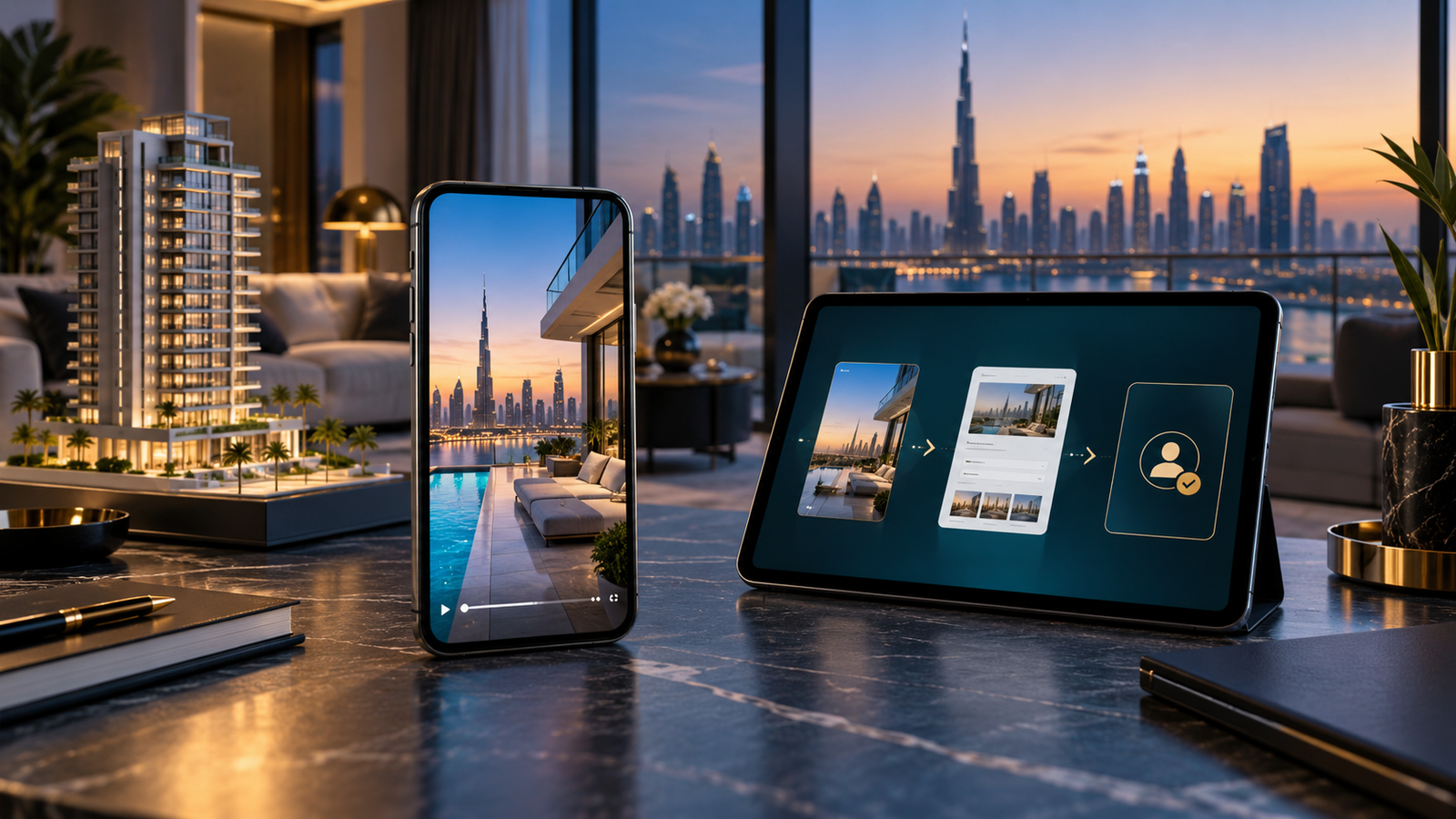
Google Demand Gen UAE property marketing now has a clearer mobile-first opportunity. On 24 September 2026, Google announced one-click experiences for Demand Gen across YouTube Shorts and Gmail, including a Shorts experience for uploaded 9:16 full-bleed image ads. For UAE property teams, the useful part is not the format alone. It is the chance to connect a vertical creative, a focused landing page and a qualified sales handoff without making the buyer work through a generic website.
This playbook explains how brokerages, developers and project sales teams can use that change without turning another visual campaign into a pile of low-intent form fills.
What changed in Google Demand Gen
Google’s September product update introduced faster experiences from Demand Gen ads on YouTube Shorts and Gmail. On Shorts, advertisers can upload 9:16 full-bleed image ads that lead into a one-click experience. Google also announced Business Agent for YouTube Ads, a conversational layer that can appear beside eligible ads using product feeds. Availability and setup can vary by account, so UAE property advertisers should confirm the features inside their own Google Ads account before planning around them.
The strategic shift is simpler: discovery ads are becoming closer to an immediate action. A buyer who notices a project while watching Shorts should land on the exact unit, community or offer promised in the creative. Sending that person to a broad homepage wastes the advantage.
Where Demand Gen fits in a UAE property journey
Demand Gen is useful before a prospect searches for a project by name. It can introduce a specific decision: whether a ready unit fits a family’s move date, whether an off-plan payment plan matches an investor’s cash flow, or whether a community makes sense for a first-time buyer.
That role is different from capturing an urgent search. A strong media plan lets visual discovery and high-intent search support each other. Our guide to UAE real estate paid media explains how to structure that mix across the funnel.
A 9:16 property creative blueprint
A vertical property ad has very little time to earn attention. The first frame should answer one buyer question, not introduce the agency. Build each asset around one property, one audience and one next step.
- Open with the decision. “Ready to move in Dubai Hills this quarter?” is clearer than “Discover luxury living.”
- Show the proof early. Use the actual view, floor plan, handover stage, payment-plan structure or verified community amenity.
- Keep one promise. If the ad offers a two-bedroom availability list, the landing page must open with that list.
- Use readable overlays. Keep price, location and handover details inside safe areas and readable on a phone.
- Avoid unsupported returns. Yield and appreciation claims need a clear source, date and basis. A confident but vague ROI promise damages trust.
- Match the CTA to intent. “Check current availability” works for early interest; “Book a viewing” suits a ready buyer.
Create several openings for the same offer: a buyer question, a location proof point, a layout detail and a payment-plan angle. Test the opening while holding the landing page and qualification rules steady. That shows which message improves lead quality, not merely clicks.
The landing page must continue the ad
The mobile page should feel like the next frame of the creative. Reuse the project name, hero image, offer and CTA. Put the decision details above the fold: developer, location, property type, indicative price, handover or readiness status, and the action a visitor can take now.
For paid traffic, a focused page usually performs a clearer job than a full project catalogue. It should load quickly, keep the form short and answer the objections that cause prospects to leave. Digital Boost’s real estate landing-page service is built around this ad-to-page continuity.
Useful qualification fields
- Buying timeline
- Budget range
- Cash or mortgage
- Ready or off-plan preference
- Preferred contact method and time
Do not ask everything at once. Collect enough to route the enquiry, then let an adviser finish the qualification by phone or WhatsApp.
Optimise for qualified actions
Google’s lead-generation guidance recommends using conversion goals that represent business outcomes, including Contact, Submit Lead Form, Book Appointment, Qualified Lead and Converted Lead. For property teams, that means the campaign should not stop learning at the form submission.
Pass meaningful stages back from the CRM: valid contact, qualified conversation, booked call, attended appointment and viewing. If the sales team marks every lead the same way, the media platform has no signal to distinguish a genuine buyer from an unreachable number.
A simple routing rule can assign leads by project, budget, language and buying horizon, then create a response task immediately. See our UAE real estate CRM and lead-routing approach and use the real estate lead quality scorecard to align marketing and sales.
A practical launch checklist
- Choose one commercial question. Start with a decision the sales team hears every week.
- Prepare native vertical assets. Create 9:16 images or video instead of cropping a landscape brochure.
- Build one matching mobile page. Keep the project facts and CTA consistent with the ad.
- Define qualification before launch. Agree what counts as a valid, qualified and converted lead.
- Connect campaign and CRM stages. Track beyond the initial form fill.
- Set a response standard. Route the lead while the project and question are still fresh.
- Review by creative promise. Compare qualified leads and booked appointments for each angle.
Measure the path, not a single metric
Use a short measurement chain: ad engagement, landing-page view, form start, form completion, valid contact, qualified conversation, booked appointment, attended appointment and viewing. Cost per lead can remain useful, but it should sit beside cost per qualified lead and cost per attended appointment.
When a creative earns attention but fails later, the remedy depends on the drop-off. Low landing-page views may indicate speed or message mismatch. High form volume with poor contact rates points to validation or targeting. Qualified conversations without appointments often reveal a weak offer, inventory mismatch or follow-up issue.
Common mistakes to avoid
- Using one generic “luxury property” creative for several projects.
- Sending every ad to the homepage.
- Hiding price, handover or location until after the form.
- Judging success only by clicks or raw leads.
- Letting paid-media and sales teams use different definitions of lead quality.
- Assuming every newly announced Google feature is active in every account.
Frequently asked questions
Is Demand Gen the same as Google Search?
No. Search responds to expressed intent, while Demand Gen can create or shape interest across visual Google surfaces. Many property campaigns need both.
Does 9:16 really matter for property ads?
Yes when the placement is vertical. A native 9:16 asset gives the property more usable screen space and lets the message read naturally on mobile.
Can this work for off-plan projects?
Yes, if the creative is specific and the landing page explains developer, location, handover, payment structure and the next buyer action clearly.
Which conversion should a property team optimise for?
Start with the deepest reliable event that occurs often enough for learning. If qualified-lead data is consistent, it is more useful than a raw form fill. Keep earlier events for diagnosis.
Build a mobile-first UAE property demand funnel
Digital Boost connects vertical creative, Demand Gen media, landing pages, WhatsApp follow-up and CRM qualification into one measurable buyer journey.
Sources
Product availability, eligibility and campaign options can vary by account and market. Check the controls available in your Google Ads account and test against qualified business outcomes.